
You Press the Button, and the Door Just Won't Finish
You're standing in the driveway, remote in hand, watching the door roll down, get about halfway, then shudder and go right back up. Or maybe it won't even start down, it just hums and sits there. You try again. Same thing. Maybe it's starting to rain, or the kids are already in the car, and you're stuck running back inside to close it by hand.
This is one of the most common calls we get, and it's rarely a mystery once you know where to look. A door that reverses mid-close or refuses to close at all is almost always telling you something specific. Here's the order we check things, and what's usually behind it.
Start With the Safety Sensors
Every garage door opener built in the last few decades has two small sensors, or "photo eyes," mounted a few inches off the floor on either side of the track. If anything breaks the invisible beam between them, the door reverses as a safety feature. This is the first thing any technician checks because it's the most common cause and the easiest to fix.
In Homestead, this gets worse during the wet season. Humidity fogs the sensor lenses, afternoon downpours splash mud and grit onto them, and direct morning or evening sun can wash out the beam entirely. A spider web, a stray leaf, or a garden hose left across the opening can also trip it. Wipe both lenses with a soft cloth, check that neither sensor has been bumped out of alignment (the small LED on each one should glow steady, not blink), and clear anything in the beam's path. This fixes the problem more often than people expect.
Next, Check the Travel Limit and Force Settings
If the sensors are clean and aligned but the door still reverses at roughly the same spot every time, the opener's travel limits are likely off. These settings tell the opener how far to travel before it should be fully closed, and how much resistance to tolerate before assuming it's hit an obstruction and reversing.
Wood and composite doors swell slightly in heat and moisture, which changes how much resistance the opener feels as the door nears the floor. If your door has not been adjusted in a while, or if a panel has swollen or warped, the opener may think it's hitting something solid and reverse automatically. Adjusting these settings takes a few minutes with a screwdriver on most openers, but if it's being reset repeatedly and not holding, that usually points to a bigger mechanical issue.
Look at the Track and Rollers
A door that binds, jerks, or reverses unevenly, especially if one side seems to struggle more than the other, often has a track problem. Rollers wear out, tracks get knocked slightly out of alignment, and salt air near the coast accelerates rust on hardware that isn't stainless or well-sealed. A bent track or a roller that's jumped its channel will make the door fight itself, and the opener reads that resistance as an obstruction. This is a visual inspection: look along both tracks for gaps, rust buildup, or a track that isn't perfectly parallel to its opposite side.
Cables and Springs Under Tension
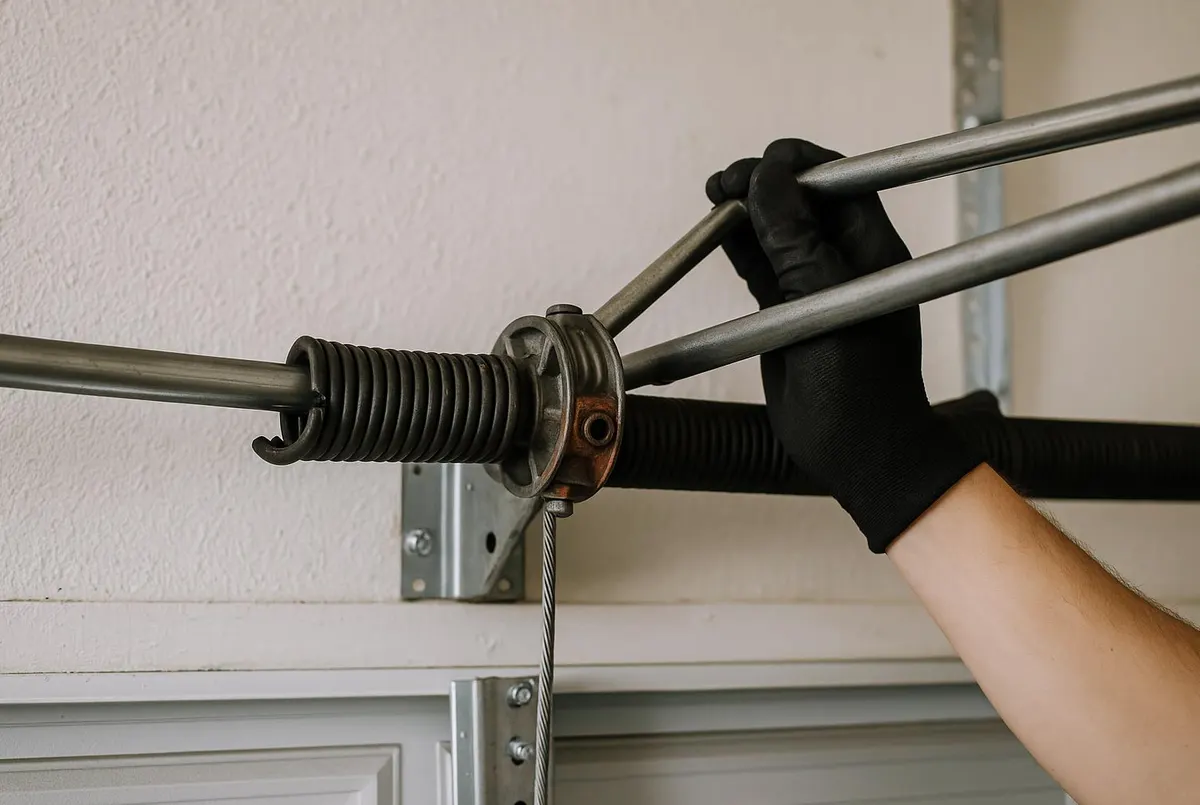
If the door won't move at all, or only moves a few inches before stopping, the springs or cables may be the issue. A frayed cable or a spring that's lost tension changes the balance of the door entirely, and the opener isn't built to force a door that's fighting its own counterbalance system. This is also where Homestead's heavier, wind-rated doors matter: they put more load on springs and cables, so wear shows up as stalling or refusal to close rather than a dramatic snap. Springs and cables under tension are not a DIY repair; this is where you stop troubleshooting and call for service.
When the Opener Itself Is the Problem
If sensors, limits, track, and cables all check out and the door still misbehaves, the logic board inside the opener may be failing. Moisture and humidity over time can corrode internal contacts, especially in detached garages with less climate control. This is usually the last thing checked because it's the least common cause, but it does happen.
When to Call Homestead Garage Door
If you've checked the sensors and the door still won't close reliably, or if you notice a frayed cable, a sagging spring, or a track that's visibly bent, stop operating the door and call us. We handle Garage Door Cable Repair and Off Track Door Repair regularly in this kind of case, and we'll diagnose whether it's a quick adjustment or a part that needs replacing before it fails completely, which is a much bigger problem during storm season.
Call Homestead Garage Door today and we'll get your door closing properly before the next downpour rolls in.