
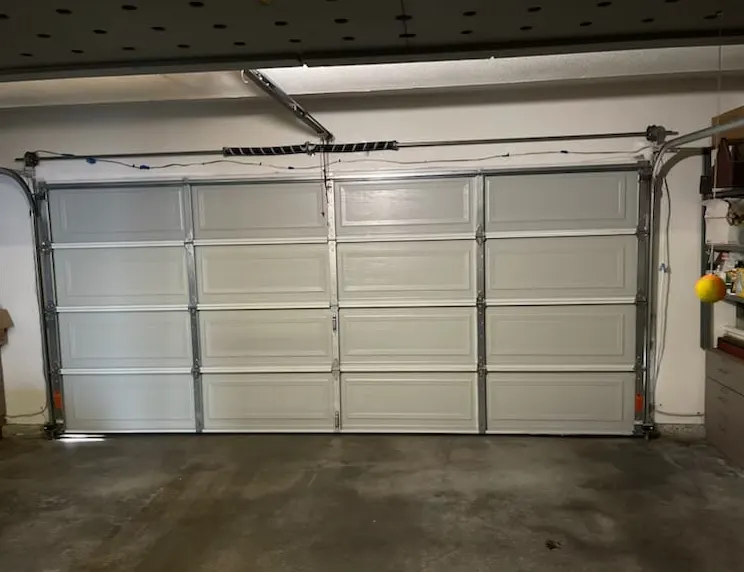
What a technician sees on a typical call
The call usually starts the same way: "Our AC runs constantly and we can't figure out why." On the inspection, the garage door tells the story before the thermostat does. Daylight shows around the bottom corners. The weatherstripping along the sides is cracked or pulled away from years of swelling and drying in the humidity. The bottom seal is flattened or torn, with a gap wide enough to slide a business card under in spots. None of that looks dramatic, but it adds up to a garage that runs 15 to 20 degrees hotter than the rest of the house most afternoons — and if that garage shares a wall or ceiling with living space, that heat doesn't stay put.
Why an attached garage matters more here than almost anywhere else
In a detached garage, a leaky door is a minor nuisance. In an attached garage, it's a direct pipeline into your home's climate system. Hot, humid outside air pushes through every gap around the door, especially during the afternoon downpours and high humidity typical of this part of Florida. That air doesn't just sit in the garage — it works its way through the shared wall, the door into the house, the attic space above, and any ductwork or AC equipment that happens to be routed through the garage, which is common in a lot of homes here.
If your air handler, ductwork, or water heater lives in the garage, this matters even more. Those components are built for a conditioned space, not a 95-degree, humid garage. A leaky door turns the garage into an unconditioned extension of the outdoors, and your AC system — plus any ducts running through it — has to work against that heat load all day long.
The three ways a leaky door drives up your bill
- Direct heat transfer: Hot air infiltrates through door gaps, raising garage temperature, which raises the temperature of anything touching that garage — shared walls, the attic, ductwork insulation.
- Humidity load on the AC: South Florida air carries a lot of moisture. When humid air gets into the garage and migrates inward, your AC has to work harder to dehumidify the house, not just cool it. That's a bigger energy draw than straight temperature alone.
- Duct and equipment losses: If ductwork runs through the garage, a hotter garage means more heat gain on that ductwork before the cool air even reaches your rooms. Insulated ducts help, but they don't eliminate the loss — they just slow it down.
How to settle the argument with your own eyes
You don't need a thermal camera to get a good read on this. Try these checks together:
- The daylight test: Close the garage door at night and turn off the garage lights. Any daylight or streetlight visible around the edges is a gap letting air through both ways.
- The card test: Slide a piece of paper or a credit card along the bottom seal and sides. If it slides through easily anywhere, the seal isn't doing its job there.
- The thermometer test: Compare the garage temperature to an interior room at the same time of day. A gap of more than 10-15 degrees above what you'd expect for a shaded, enclosed space usually points to air infiltration, not just lack of insulation.
- The utility bill comparison: Pull a summer bill from a year when the door and seals were newer, if you have one. A steady creep upward alongside visibly worn seals is a pattern worth paying attention to.
If most of these point the same direction, the leaky door isn't a minor cosmetic issue — it's an efficiency problem with a real dollar cost attached, and whoever argued that is right.
What actually fixes it — and what doesn't
Weatherstripping and bottom seals are wear items, not lifetime parts. Florida's heat, humidity, and UV exposure break them down faster than in drier climates, so they need more frequent attention than a lot of homeowners expect. A few realistic notes on trade-offs:
- Replacing worn seals is inexpensive and fast, but it only solves the problem if the door panels and tracks are still aligned correctly. A door that's slightly off track will chew through a new seal just as fast as the old one.
- Adding weatherstripping without checking the door's overall fit is a temporary patch. If the door doesn't sit flush and square on the frame, air will find another way in.
- If the garage is a true hot spot — not just a draft issue — insulation on the door panels themselves can help, but it won't do much if the seals around it are still gapped.
When to call Homestead Garage Door
If the daylight and card tests show gaps, or the door doesn't close flush against the frame anymore, that's worth a proper look before next summer's bills come in. As part of a Garage Door Maintenance & Tune-Up, we check alignment, hardware, and seal condition together, since a worn seal is often a symptom of a bigger alignment issue rather than the root cause. If the bottom seal itself is cracked, flattened, or torn, that's a straightforward fix — we can usually replace it on the spot.
If you're in Homestead, Florida City, Naranja, Leisure City, Princeton, Cutler Bay, Palmetto Bay, or Kendall and your garage runs hot no matter what the thermostat says, give Homestead Garage Door a call. We'll find out whether it's the door, the seals, or both — and get it fixed right.