
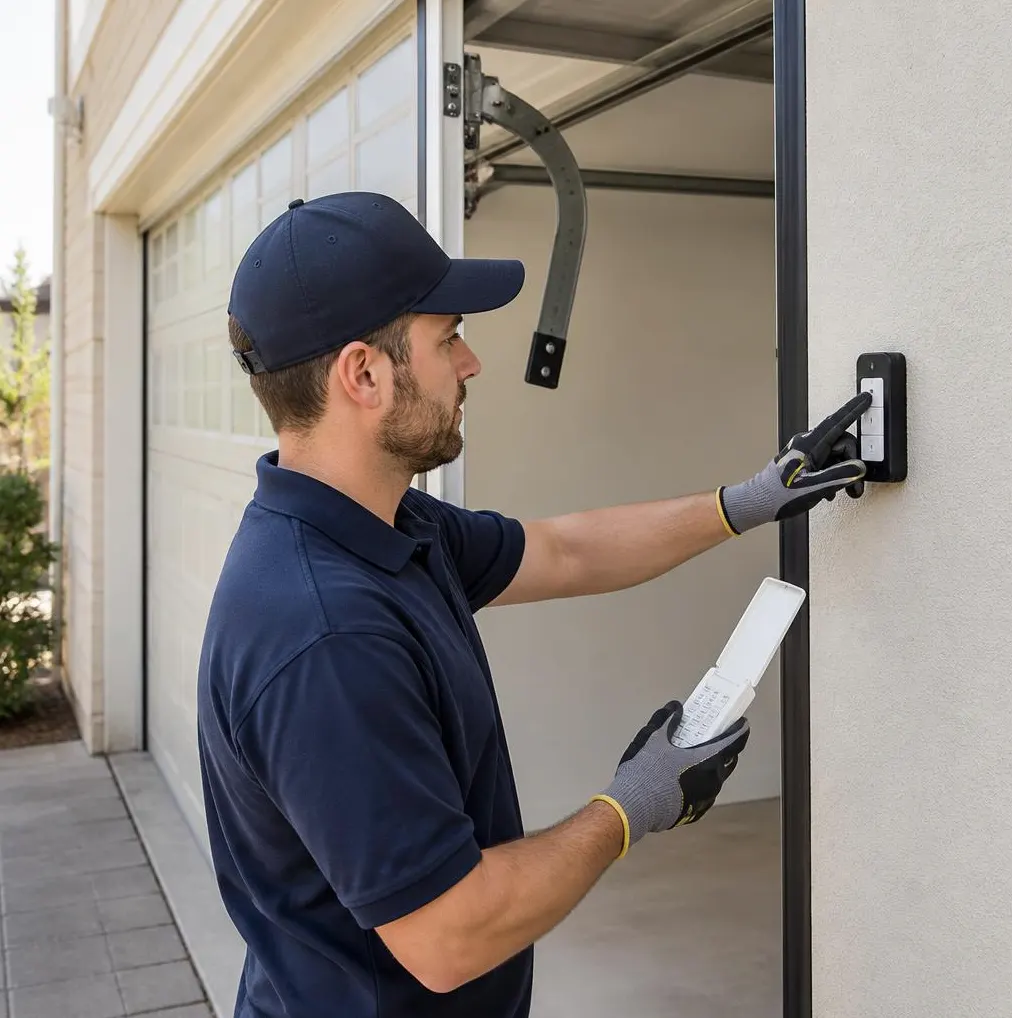
What a Technician Sees on These Calls
The call usually starts the same way: a homeowner wants a quote to replace a cracked window panel, and while the technician is up on the ladder, three more problems show up. The acrylic insert has gone cloudy from UV exposure. The aluminum frame around the glass has started to pit from salt air. And there's a faint ring of condensation trapped between two panes that were sold as insulated but never sealed properly. None of this is unusual here. South Florida sun, humidity, and storm debris are hard on anything with a seam or a seal, and windows in a garage door have both.
Before you add windows to a new door or replace a damaged one, it helps to know what actually matters for this climate and what's just a nice-looking upsell.
Light vs. Privacy: The Real Trade-off
Windows bring daylight into a garage, which matters if you use the space as a workshop, gym, or storage area you actually walk into. But full-clarity glass also means anyone walking by can see straight in — tools, vehicles, whatever's sitting out. Homeowners usually land in one of three spots:
- Clear glass for maximum light, best for garages set back from the street or facing a side yard.
- Frosted or obscure glass that lets light through but blurs detail — a good middle ground for doors facing the street directly.
- Tinted glass that cuts glare and heat gain but also cuts down on light transmission, which matters more here than in cooler climates because of how much direct sun a west- or south-facing door takes in the afternoon.
Placement matters as much as glass type. Windows set higher on the top panel let light in without giving a clear sightline into the garage from the sidewalk or driveway.
Security: What Actually Helps
A row of windows at eye level near the door's control panel or entry point is a real vulnerability — it's an easy way to see whether a garage is occupied or to locate a manual release. If security is a priority, keep windows on the top panel only, away from the opener mechanism, and consider laminated glass over single-pane tempered glass. Laminated glass holds together when struck instead of shattering into an opening, which also happens to help during storms (more on that below).
Decorative iron grids or grilles are often marketed as a security feature. In practice, they're cosmetic. They don't stop someone from breaking the glass behind them; they just look like they would. If you want the look, fine — just don't pay extra for it as a security upgrade.
Insulation and Wind Load: Where Climate Actually Changes the Decision
This is the part that's easy to overlook. Garage doors here are built to meet wind-load requirements, and any window inserted into a panel is a break in that panel's structural integrity. Not all glazing is rated the same way:
- Impact-rated glazing is built to stay intact under wind-borne debris, which matters during hurricane season when flying debris is the real threat to a door, not just wind pressure.
- Standard single-pane inserts may look identical but aren't rated for impact, and a cracked window during a storm can compromise the whole door's pressure resistance.
- Insulated (dual-pane) windows help with heat transfer, which matters in a garage that shares a wall with living space or gets used as a workspace. But dual-pane only helps if the seal holds — a failed seal is exactly what causes the fogging technicians see on service calls.
If insulation is a priority for comfort rather than energy savings, remember that windows are always a weaker point in an insulated door's overall R-value than the surrounding foam-core panel. A few small windows won't undo an insulated door's performance, but a wide bank of single-pane glass can.
What to Ignore
- Elaborate grille patterns sold purely as a security or style upgrade with no structural function.
- Cheap plastic snap-in inserts — they yellow and crack under UV exposure faster than tempered glass or quality acrylic.
- Window shapes or arrangements that look good in a brochure but don't match your door's wind-load rating once installed.
Questions to Ask Before You Buy
- Is this glazing impact-rated, and does adding it affect the door's wind-load certification?
- What's the frame material — aluminum, vinyl, or composite — and how does it hold up to salt air and humidity?
- If this is a dual-pane window, what's the warranty on seal failure and fogging?
- Can window placement be adjusted to balance light with privacy and security?
- What does it cost to replace a single cracked pane versus the whole insert?
When to Call Homestead Garage Door
If you're weighing windows for a new door, our Garage Door Installation & Replacement team can walk you through glazing and frame options that hold up to local humidity and wind-load rules before you commit. If you've already got a door with a cracked, fogged, or rusted-out window insert, that's a job for our Garage Door Maintenance & Tune-Up service — we'll check that the surrounding panel, seals, and hardware are still sound, not just swap the glass.
Call Homestead Garage Door to talk through your options, get an honest look at what your current door can handle, and get it done right the first time.